Vidyarthi Bhavan: The City Inside A Restaurant
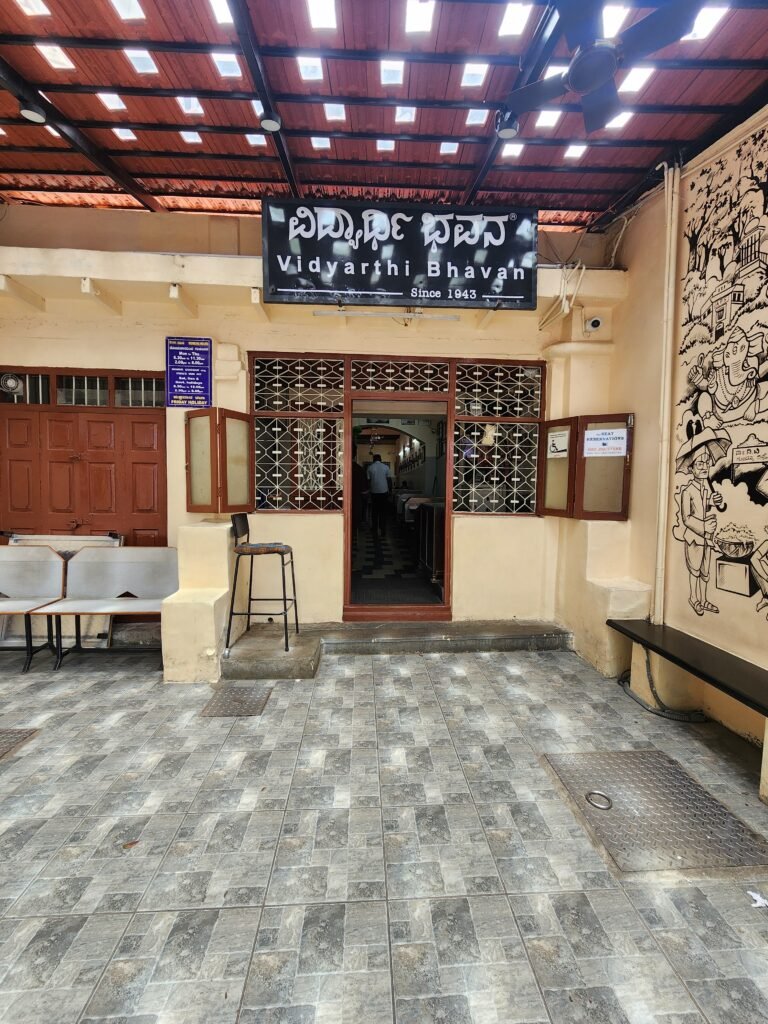
In 1943, a modest canteen opened in Gandhi Bazaar, Bengaluru, serving breakfast and evening snacks to students from nearby institutions like Acharya Pathasala and National College. It was this student-driven culture that eventually gave the space its name: Vidyarthi Bhavan.
A look inside the restaurant that became part of Bengaluru’s memory and culture.
At the time, Basavanagudi was a deeply conservative locality where eating out was far less common than it is today. The restaurant was never conceived as a legacy institution. It began simply as a way to serve good food and earn a livelihood.
“People started gathering in places like this to chat, exchange ideas, and spend time over a cup of coffee or breakfast,” says Arun Kumar Adiga, Managing Director of Vidyarthi Bhavan.
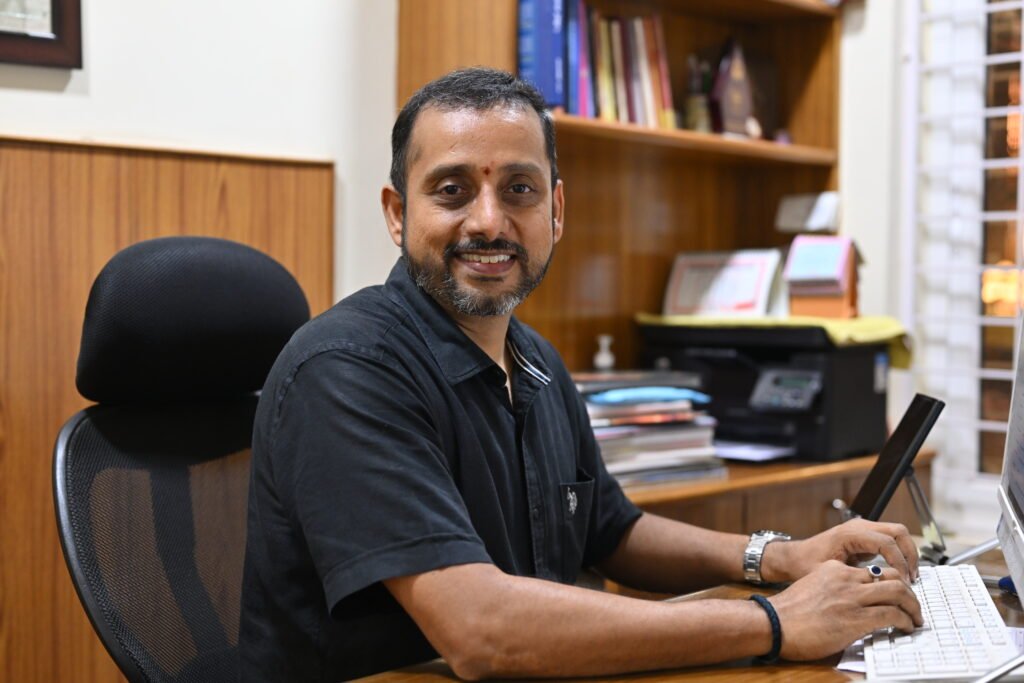
Founded by Venkataramana Ural, the restaurant was later taken over by the Adiga family in 1970, who continued to preserve the recipes, methods, and atmosphere associated with the place.
Over time, the small canteen evolved into far more than a place to eat, gradually becoming part of Bengaluru’s everyday rhythm and memory. As the city expanded through the decades, and particularly during the economic and IT boom that transformed Bengaluru in the 1990s, food habits changed alongside it. Restaurants became social spaces, gathering points, and places where communities formed around shared routines.
CONSISTENCY ABOVE ALL
As Bengaluru evolved through the decades, especially during the IT boom of the 1990s, restaurants became part of everyday social life, and places like Vidyarthi Bhavan became woven into the city’s identity.
Yet, despite the changes around it, the restaurant’s core has remained remarkably consistent.
“Consistency is the most important factor people associate with us,” says Adiga. “Food is an emotion. If the taste changes, people cannot relate to it anymore.”
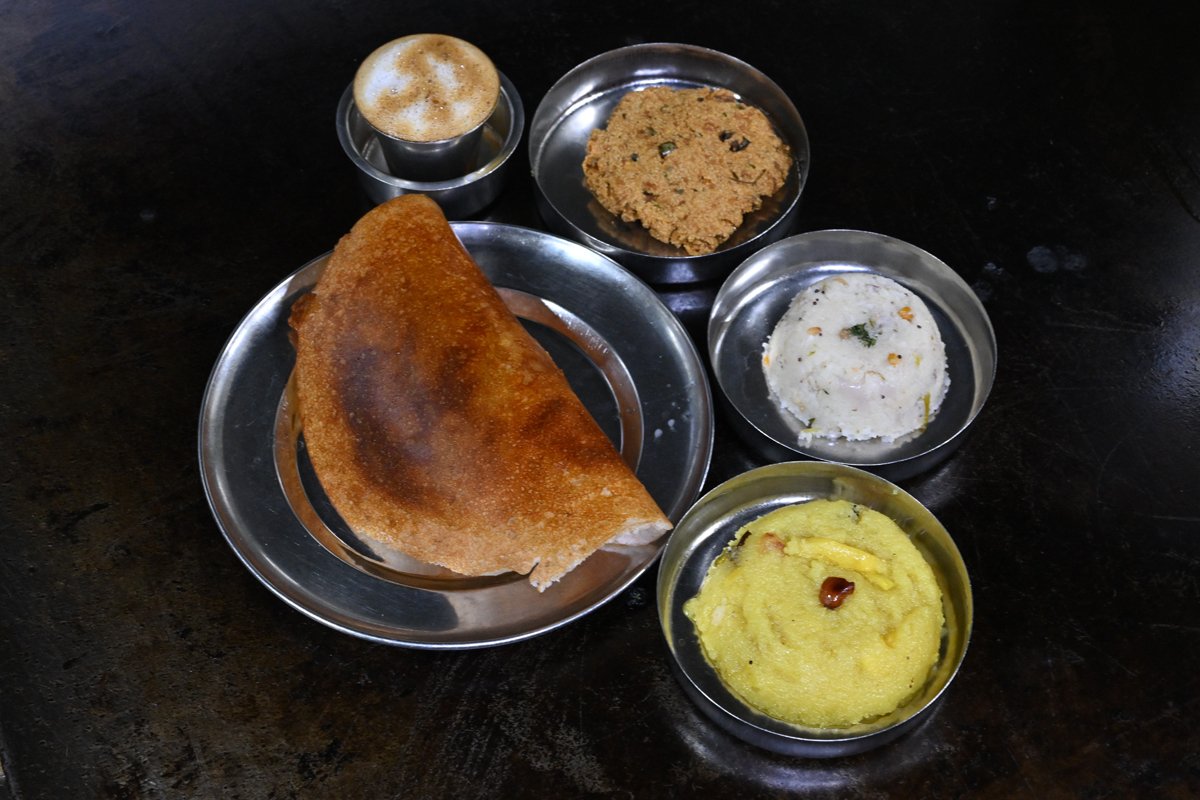
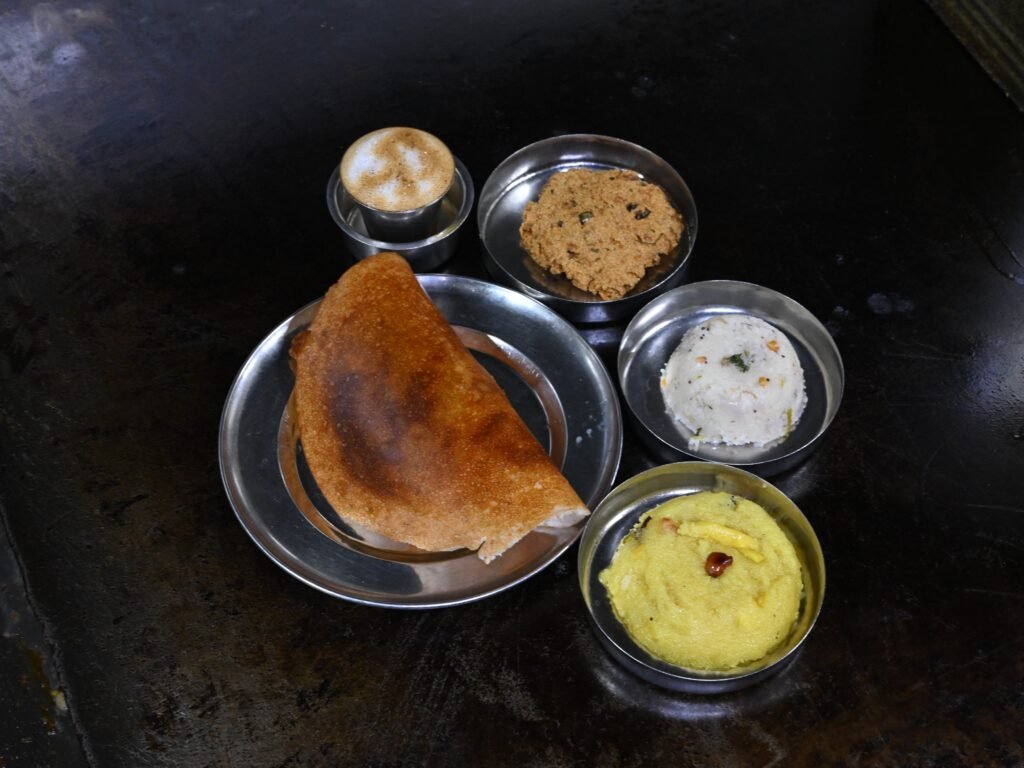
That consistency is perhaps best represented through its iconic masala dosa.
“Usually dosas are either thin and crispy, or thick and soft. Thick and crispy is rare,” Adiga explains. “We have stuck to what we have been doing. We do not chase trends.”
The restaurant has retained the same methods of preparation and standardisation over generations. For Adiga, consistency is not simply about maintaining a recipe. It is about preserving a memory. Customers return expecting a familiar taste, and with it, a connection to another time in their lives.
MORE THAN JUST FOOD
Inside the restaurant, much of the experience still feels familiar to generations of regulars. The tightly packed seating, constant movement of staff, and steady flow of customers continue to shape the rhythm of the space.
“When people return, it rekindles memories,” says Adiga. “They come back to the same physical space where they experienced it years ago.”
The restaurant’s enduring appeal is tied not only to its food but also to its atmosphere. Despite minor cosmetic updates over the years, the structure and character of the space have remained largely unchanged. For many visitors, returning to Vidyarthi Bhavan feels like returning to a chapter of their own lives.
Social media has introduced Vidyarthi Bhavan to newer generations of visitors, but Adiga believes preserving legacy requires constant effort.
“Maintaining legacy itself is a challenge. It cannot be taken for granted. It has to be earned every single day.”
At the same time, he recognises that legacy alone is not enough. The restaurant continues to adapt where necessary, particularly through technology and operational improvements, while remaining careful not to alter the core identity that generations of customers associate with the name.
“We should stay open to change, but not compromise on the core identity,” he says.
More than 80 years later, Vidyarthi Bhavan remains one of Bengaluru’s most enduring food institutions because it continues to offer familiarity, consistency, and continuity within a rapidly changing city.
In many ways, it is no longer just a restaurant. It is a small piece of Bengaluru itself.
This feature is based on conversations and insights shared by the Vidyarthi Bhavan team.

India’s First In-Train Magazine 001
India’s first in-train magazine offers travelers engaging content like travel tips, destination highlights, and entertainment, making the journey more enjoyable and informative.

Follow Us
Popular Categories