How Space Discoveries Are Changing Science
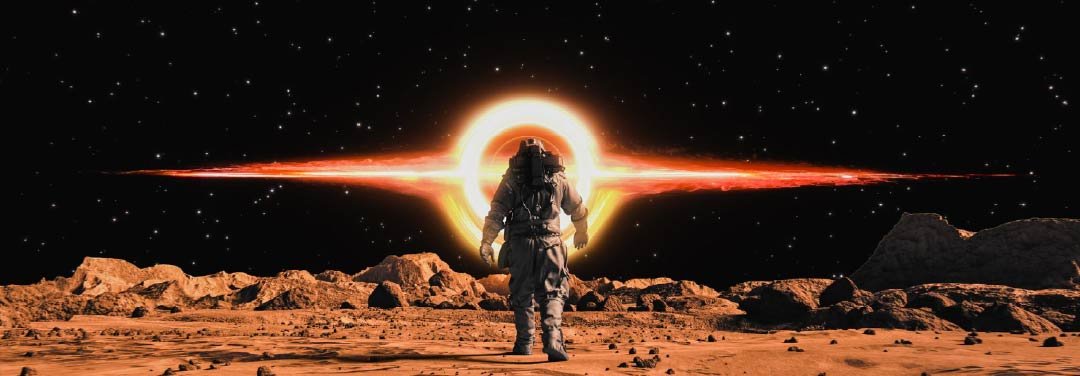
The universe is full of mysteries, and every new space discovery brings us closer to understanding it. From black holes to habitable planets, modern space research is reshaping science in ways we never imagined. But how exactly are these discoveries influencing scientific fields? Let’s explore the latest breakthroughs and their impact.
1. Discovering Exoplanets and the Search for Life
For decades, scientists believed Earth might be unique, but the discovery of exoplanets changed that perspective.
What Are Exoplanets?
Exoplanets are planets outside our solar system that orbit other stars. The first confirmed exoplanet was discovered in 1992, and since then, astronomers have found over 5,000 exoplanets!
Why It Matters:
- Some exoplanets exist in the habitable zone, where conditions may support life.
- Discovering Earth-like planets increases the possibility of extraterrestrial life.
- NASA’s James Webb Space Telescope (JWST) is analyzing exoplanet atmospheres for signs of habitability.
Example: The discovery of Kepler-442b, an exoplanet similar to Earth, raised hopes for finding alien life.
2. Black Holes and the Nature of Gravity
Black holes have fascinated scientists for years, but recent discoveries are revolutionizing physics.
Key Discoveries:
- In 2019, scientists captured the first-ever image of a black hole, proving Einstein’s General Theory of Relativity correct.
- Black hole mergers detected by gravitational wave observatories (LIGO and Virgo) confirm how space-time behaves in extreme conditions.
Why It Matters:
- These findings help scientists understand how galaxies evolve.
- Gravitational wave detection opens new doors for astronomy beyond light observation.
Example: The black hole at the center of the Milky Way, Sagittarius A*, was photographed in 2022, confirming long-held theories.
3. The Expansion of the Universe
For years, scientists believed the universe’s expansion was slowing down, but recent discoveries prove the opposite!
What’s Happening?
- The universe is expanding faster than expected, driven by dark energy.
- This discovery challenges existing physics models, forcing scientists to rethink cosmic evolution.
Why It Matters:
- Understanding dark energy can reshape our understanding of gravity and the fate of the universe.
- New telescopes, like the Euclid Space Telescope, are studying this mysterious force.
Example: Observations from Hubble and JWST confirm that galaxies are moving away at increasing speeds.
4. Water and Ice on Other Planets
Finding water is key to discovering life beyond Earth. Scientists have detected water ice and liquid oceans on several celestial bodies.
Key Discoveries:
- Europa and Enceladus, moons of Jupiter and Saturn, have underground oceans.
- Mars has seasonal water flows, proving it once had a wet climate.
Why It Matters:
- Water is essential for life, increasing the chance of microbial organisms in space.
- Future missions aim to explore these moons for signs of alien life forms.
Example: NASA’s Europa Clipper mission (2024) will investigate Europa’s underground ocean.
5. Space Telescopes Redefining Astronomy
Advanced telescopes are providing clearer images of space, uncovering details never seen before.
Revolutionary Space Telescopes:
- James Webb Space Telescope (JWST) captures galaxies from billions of years ago.
- Hubble Space Telescope has identified distant supernovae, helping study the universe’s age.
Why It Matters:
- These telescopes help scientists study the early universe.
- They allow astronomers to analyze planetary atmospheres for life-friendly conditions.
Example: JWST’s first images in 2022 revealed the deepest views of the universe ever seen.
6. The Possibility of Humans Living on Mars
Space agencies like NASA and SpaceX are working on human missions to Mars.
Key Developments:
- NASA’s Artemis Program is preparing astronauts for deep-space travel.
- Elon Musk’s SpaceX is developing the Starship rocket for Mars colonization.
Why It Matters:
- Space colonization could preserve human life if Earth becomes uninhabitable.
- Mars research helps develop sustainable space habitats.
Example: NASA’s Perseverance rover (2021) is collecting Mars soil samples to study its habitability.
7. The Rise of Space Mining
Asteroids hold valuable resources, and companies are exploring ways to mine them.
Why Space Mining Is Important:
- Asteroids contain rare metals like platinum and gold.
- Mining space resources could fuel future space missions.
Example: NASA’s Psyche mission (2023) will explore a metal-rich asteroid.
8. The Search for Alien Signals
Scientists are using powerful telescopes to detect signals from extraterrestrial civilizations.
How Scientists Are Searching:
- SETI (Search for Extraterrestrial Intelligence) scans radio waves for alien messages.
- AI-powered systems analyze signals that could indicate advanced life.
Example: A mysterious signal, “Wow! Signal” (1977), remains unexplained to this day.
9. Space Weather and Its Impact on Earth
Solar flares and cosmic radiation can affect Earth’s power grids and satellites.
Why It’s Important:
- Understanding space weather helps protect communication systems.
- Scientists are working on early-warning systems to prevent major disruptions.
Example: In 2022, a solar storm knocked out 40 SpaceX satellites.
10. Quantum Physics and Space-Time Theories
New discoveries in quantum physics challenge our understanding of reality.
Key Concepts:
- Wormholes could allow space travel between galaxies.
- Quantum entanglement might enable instant communication across space.
Why It Matters:
- These discoveries could lead to new space travel technologies.
- Understanding quantum physics helps in developing next-gen computing.
Example: Scientists are experimenting with quantum teleportation for ultra-fast data transfer.
Conclusion
The latest space discoveries are pushing the boundaries of science and technology. From exploring habitable exoplanets to understanding black holes, every breakthrough brings new questions and possibilities.With advanced space telescopes, Mars missions, and the search for alien life, the future of space exploration looks promising. The universe is full of secrets, and each discovery helps us unlock its mysteries!

India’s First In-Train Magazine 001
India’s first in-train magazine offers travelers engaging content like travel tips, destination highlights, and entertainment, making the journey more enjoyable and informative.

Follow Us
Popular Categories