Africa in the western ghats
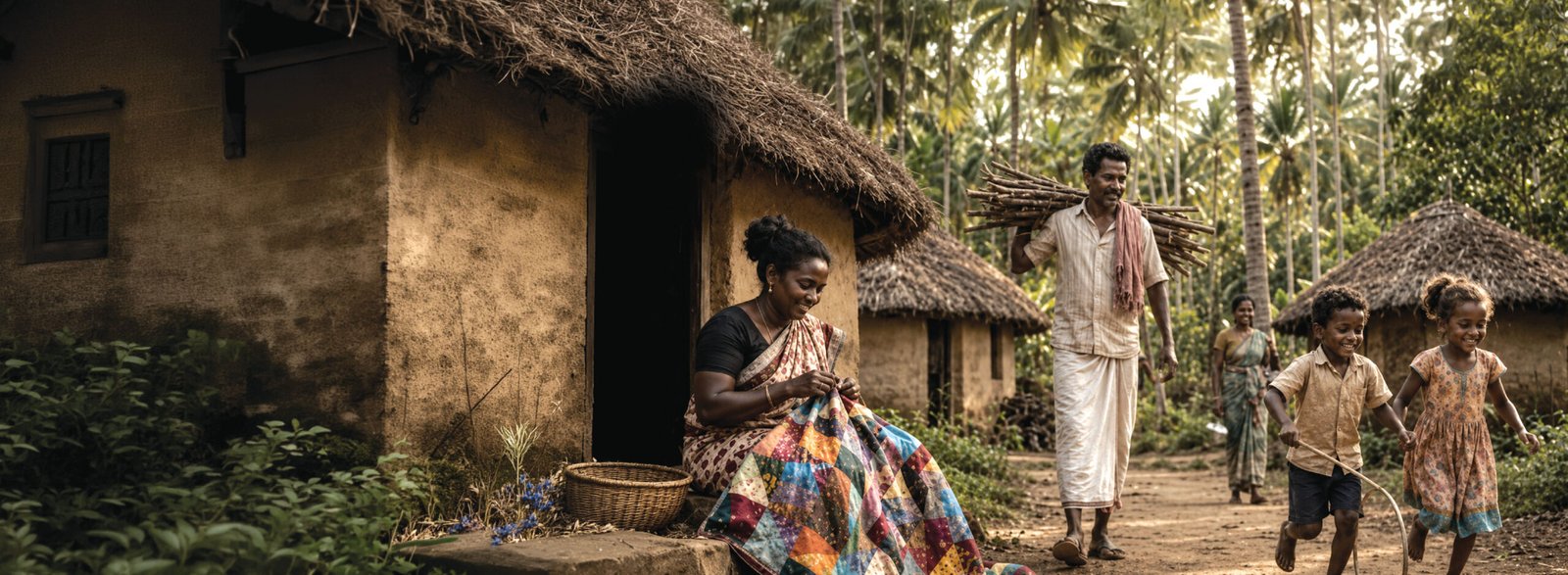
Four centuries after crossing an ocean, the Siddis still call Karnataka home.
Walk deep into the forests of Uttara Kannada and you may hear Kannada spoken in a village whose history stretches far beyond Karnataka — across the Arabian Sea to Africa.
The people are the Siddis.
Today, Siddi communities live across parts of Yellapur, Haliyal, Ankola, Joida, Mundgod and Sirsi. They farm, gather forest produce, speak local languages and have lived in this landscape for generations. Yet their ancestry tells an extraordinary story of movement across continents.
The Siddis trace their origins to African populations, particularly from Bantu-speaking regions of eastern and southeastern Africa. Africans reached India over several centuries and through different routes — as sailors, soldiers, merchants, servants and enslaved people. During the Portuguese period, larger numbers arrived through ports along India’s western coast.
Some eventually moved inland.
The forests of what is now Karnataka became home.
Centuries later, genetic research has confirmed strong African ancestral markers among Siddi populations, providing biological evidence of a journey whose finer details survive largely through history and community memory.
But this is not only a story about where the Siddis came from.
It is also about what happened after they arrived.
Over generations, they became deeply woven into Karnataka. Kannada, Konkani and other regional languages entered everyday life. Local food, clothing and occupations became part of their identity. Different Siddi communities adopted Hinduism, Islam and Christianity. Africa remained in ancestry, while India became home.
One of their most distinctive cultural expressions is Siddi Kawandi, a quilting tradition practised largely by women. Old saris and worn pieces of cloth are layered, cut and stitched together by hand into vibrant geometric quilts. Nothing has to be new. Fabric that has already lived one life is given another, carrying colour, memory and family history with it.
For generations, the community remained largely outside mainstream public attention. That changed symbolically in 2020, when Shantaram Budna Siddi became the first person from Karnataka’s Siddi community to enter the State Legislative Council.
That moment mattered because the community’s presence in the state stretches back centuries.
The Siddis are not visitors from Africa. They are part of Karnataka — shaped by its forests, languages and villages while carrying the memory of another continent. Four centuries can change a language, a landscape and a way of life. But history leaves traces. And in the Western Ghats, some of those traces still lead all the way to Africa.

India’s First In-Train Magazine 001
India’s first in-train magazine offers travelers engaging content like travel tips, destination highlights, and entertainment, making the journey more enjoyable and informative.

Follow Us
Popular Categories