YOUR PLATFORM — NATIVE CONTENTThe Wheel That Changed PudukkottaiYOUR PLATFORM — NATIVE CONTENT
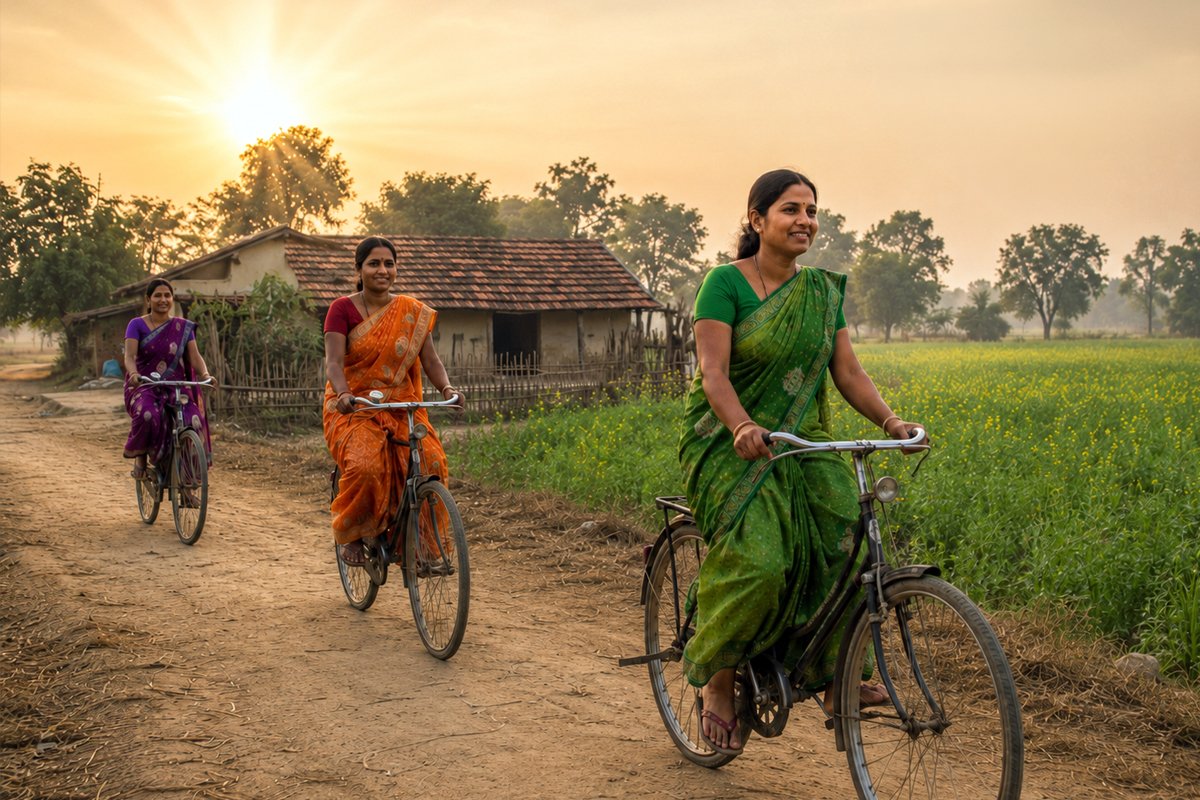
In the early 1990s, women in Tamil Nadu lived within relatively fixed boundaries. Outside the home, mobility was rare, decisions were made for them, and independence was something they read about, not lived. Pudukkottai, one of the poorest districts of the state, was no exception — until the Total Literacy Campaign came in 1990 and changed the terms of the conversation altogether.
For years Pudukkottai women had walked everywhere – to fetch water, to carry produce, to reach the fields, to visit the market, to take their children to school. A trip of a few kilometres could take half a day. The alternative to further travel was waiting for a bus or depending on a man.
Then a group of women pedalled into a village with a banner saying Arivoli — the light of knowledge. They came to teach to read and write. But District Collector Sheela Rani Chunkath saw a larger gap: literacy alone would not free women. They had to be able to move.
So cycling was part of the campaign.”
The first sight was a laugh. Sarees caught in frames made for men. Women fell, laughed, climbed back on. Then a strange thing happened. One woman taught another, villages organised contests and by 1992-93, over one lakh women across the district had learnt cycling.
The effect was not limited to Pudukkottai. The district’s transformation became a point of reference across Tamil Nadu — evidence that mobility could be engineered into empowerment. In the years that followed, the state government gave away free bicycles to schoolgirls all over Tamil Nadu, a program that has since lowered the gender gap in rural school transportation and become one of Tamil Nadu’s most enduring welfare interventions.
The women of Pudukkottai did not set about to start a movement. They just wanted to get to the next village. But in doing so they redefined what was possible for the woman who followed them—in her district, and far beyond.
For the lead image (wide, tone-setting):
- “Silhouette of a Woman Riding a Bicycle at Sunset” — strong mood shot, echoes the “freedom” closing line well as a title-page image.
For a supporting/inset shot:
- “Happy woman on her bicycle” (Unsplash) — candid, warm, works well next to the “one woman taught another” section.
- “A woman riding a bike down a street” (Unsplash) — clean daylight shot, good for a secondary column image.
A practical note on accuracy vs. license:
None of these are actual Pudukkottai or Tamil Nadu archival photographs — those (P. Sainath/PARI images) are copyrighted editorial photography, not license-free, so I’d avoid lifting them for print. The free-stock options above are generic/global in feel — saree, rural Tamil Nadu setting, or period-accurate 1990s styling won’t be in Unsplash/Pexels libraries.
Given that gap, my honest recommendation stays the same as before: for a story this specific and historically grounded, a commissioned illustration (sepia-toned or linework, depicting saree + crossbar bicycle + village road) will read far more authentically than a generic license-free stock photo, and gives Your Platform full usage rights outright.
India’s First In-Train Magazine 001
India’s first in-train magazine offers travelers engaging content like travel tips, destination highlights, and entertainment, making the journey more enjoyable and informative.

Follow Us
Popular Categories