Home in full bloom
A warm modern approach to festive decorating
The festive season announces itself at the floor and the doorway before it reaches any room. The kolam goes down at first light. Mango leaves and marigold get strung across the threshold. The brass lamp is wiped, filled and set where it will be seen from the street. Everything that follows inside continues that opening gesture.
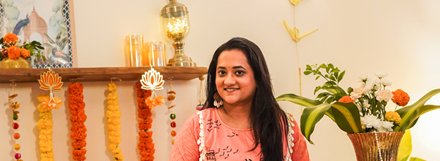
For Stuti Gupta, a home décor content creator, entrepreneur and founder of Livoh, a home décor and kitchen brand, that familiar feeling is still at the heart of a festive home. Growing up, celebrations meant diyas, flowers, rangoli and familiar decorative pieces returning year after year. Today, she sees homes becoming more experimental, with themed corners, unexpected colours, DIY details and everyday objects finding new festive uses. What has stayed constant is the intention: making home feel a little more special and joyful for the people gathering there.
Her own relationship with interiors began much more simply. During the COVID-19 lockdown, she started experimenting with DIY projects and styling small corners of her home. What began as a hobby grew into content around décor, organisation, budget-friendly finds and easy transformations, eventually leading her to launch Livoh. Through it all, the idea has remained rooted in creating spaces that are both beautiful and functional.
“For me, a beautiful home is not about following one particular design style. It is about creating a space that feels like you,” she says.
Three Things, Not Thirty
Furnishings, lighting, one statement corner. That is the whole brief.
Furnishings come first because they are the fastest win. A change of cushion covers, a throw or curtains, and the room already reads differently before a single decorative object gets touched.
Lighting follows, with warm fairy lights and festive hangings bringing another layer without demanding a complete transformation.
The corner comes last and matters most, usually the entrance, built with real intention. Flowers, a toran, diyas or a styled console can do the work. One thoughtfully styled threshold can carry the impression of an entire festive home.
A Palette Beyond Red and Gold
Festive colour does not have to begin and end with maroon, red and gold. Stuti is drawn to softer combinations such as blush pink with muted gold, sage or olive green with cream, and terracotta against beige and warm wood. Powder blue with ivory and silver makes for a gentler setting, while deep teal and antique gold brings richness.
The trick is to resist making everything perfectly coordinated.
“I like mixing a soft base with one deeper festive colour and then bringing in warmth through brass, wood, flowers or warm lighting.”
It allows the home to feel celebratory while still retaining the personality of the people who live there.
Light Like a Memory
This is where she is most particular. Not brighter, but warmer. Small sources placed at different heights around a room allow the light to build gradually rather than flood the entire space at once.
Diyas and candles sit on floors, consoles and dining tables. Lamps soften darker corners, while warm fairy lights add the final festive layer. The harsh overhead or white lights go off once evening sets in, and the smaller, softer sources take over.
“Festive lighting is less about having more lights and more about creating the right glow in the right places.”
The result is a home lit in pockets, where the glow of a diya or lamp becomes part of the décor rather than simply a source of illumination.
FIVE-MINUTE GLOW-UPS
1. Refresh the textiles
Swap a few cushion covers, add a festive throw or change the curtains for an instant colour shift.
2. Create a floral moment
Cluster fresh marigolds, roses or tuberoses in a brass vessel, urli or even a glass jar.
3. Change the light
Layer warm fairy lights, diyas and candles, then switch off harsh white lights after dark.
4. Style one corner
Choose the entrance, console or a side table and bring together flowers, diyas and a favourite traditional piece.
5. Shop your own home
Turn a serving tray into a diya arrangement, use a dupatta as a runner or backdrop, or fill brass and copper vessels with flowers.
TheTable That Leaves a Room
The same restraint carries over to how she sets a table. A runner or placemats form the base, followed by low, clustered arrangements of fresh flowers in brass or copper vessels and a few diyas or candles.
Rather than one large centrepiece, the arrangement stays low and broken into smaller moments, with enough open space kept clear for serving food, placing plates and, importantly, seeing the people sitting across from you.
A festive table, in her view, should announce the occasion without ever getting in the way of it.
“The best festive table is one that feels elegant and special, but still leaves plenty of room for good food, conversations and family time.”
Old Things, New Work
Pieces that already carry history, the brass, copper, old textiles and inherited furniture, earn their place through use rather than display.
A brass vessel can hold flowers or diyas instead of sitting empty. An old textile can become a runner or backdrop instead of staying folded away. But the same principle extends beyond heirlooms. Glass jars can hold fairy lights, pickle and masala jars can become vases for marigold and tuberose, and even wine or drinking glasses can be turned upside down and repurposed as candle holders or miniature floral arrangements.
“You don’t always need something new. Sometimes, you just need to style what you already own a little differently.”
Set beside contemporary décor, these familiar objects stop feeling like things that have been brought out for an occasion and start feeling like part of the home again. It is also where the modern festive home perhaps differs most interestingly from a completely new seasonal makeover. The things already in the cupboard are allowed to tell another story.
The Ritual That Stays
Styles change, palettes shift and entire rooms get reimagined. But every year, Stuti returns to the entrance.
Flowers, a toran and diyas come back, alongside new hangings and older pieces rearranged for another celebration. They are the same simple elements she remembers from growing up, and they still have the ability to make the house feel festive almost immediately.
“My design style may have evolved over the years, but these familiar elements have stayed.”
For all the contemporary palettes, inventive repurposing and carefully layered light, perhaps that is what ultimately makes festive decorating work. The home can change without losing the rituals that make the occasion recognisable.
The oldest festive habits are rarely outdated. They are simply waiting to be lit again.

India’s First In-Train Magazine 001
India’s first in-train magazine offers travelers engaging content like travel tips, destination highlights, and entertainment, making the journey more enjoyable and informative.

Follow Us
Popular Categories