CINEMA & BEYOND | IN CONVERSATION
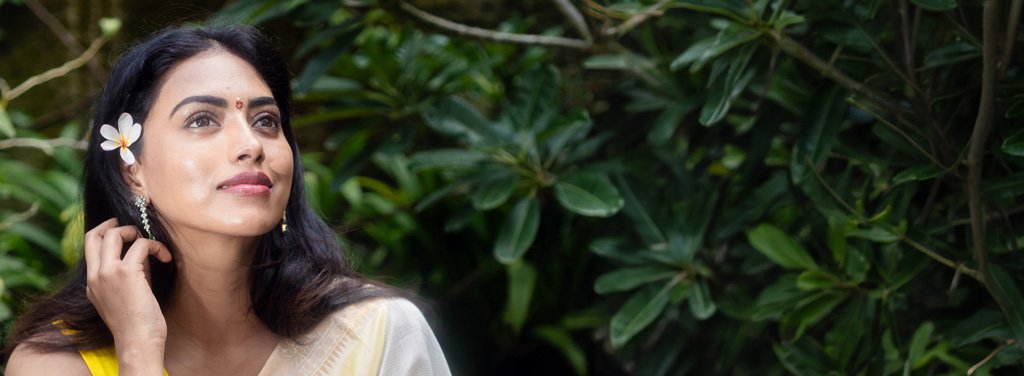
MISS REPRESENTED
Imperfect heroines, overlooked talent and the question of who gets to tell women’s stories on screen.
Cinema loves a heroine. The kind who is endlessly compassionate, impossibly strong or perfectly flawed in all the right ways. But where are the women who contradict themselves, make questionable decisions and lead wonderfully ordinary lives?
For actor Kamakshi Bhaskarla, those are precisely the women worth exploring.
“Real women are complicated. They’re ambitious, vulnerable, selfish sometimes, extraordinarily generous at other times. They make mistakes, contradict themselves, and evolve,” she reflects.
Her perspective is shaped by an unconventional path through medicine, pageantry and theatre before finding her place in Telugu cinema.
For Kamakshi, the common thread connecting these different experiences has always been curiosity. Studying medicine helped her understand the human body, while her interest in human emotions gradually led her towards storytelling.
“Cinema became a serious pursuit when I realized I didn’t just enjoy performing, I wanted to spend my life telling stories,” she shares.
BETWEEN THE EXTREMES
Studying medicine in China deepened Kamakshi’s curiosity about human behaviour, while theatre at Samahaara taught her to listen, observe and understand emotions beyond dialogue.
“I don’t want to judge my characters. I want to understand them. Because understanding is where empathy begins,” she shares.
That curiosity shapes her roles. Maa Oori Polimera 2 marked a turning point, bringing recognition and credibility as a performer. Projects including Virupaksha and Agadha further expanded her filmography.
Her experience in theatre continues to influence how she approaches performance. At Samahaara, she learned the importance of being present, listening to fellow performers and allowing emotions to exist without always expressing them through dialogue.
“Theatre taught me that a good actor doesn’t just know how to speak. A good actor knows how to listen,” she explains.
Her medical background has also helped her approach characters through their motivations, fears and emotional responses. While preparing for Kala in Dhootha, she explored how fear, grief and survival could coexist within a person.
Yet her interest extends to the kinds of women cinema represents.
“I’d love to see Telugu cinema explore more ordinary women with extraordinary emotional lives,” she says.
For her, compelling stories can exist beyond romance, marriage or sacrifice.
WHO GETS THE PART?
Authentic representation raises another question: who gets to portray these women?
Kamakshi believes Telugu-speaking actresses bring valuable cultural and linguistic familiarity to storytelling, while recognising that talent transcends geography.
“It’s not about creating fewer opportunities for others. It’s about recognising the talent that’s already here,” she explains.
Her argument is about widening possibilities for both characters and performers.
She believes that language, dialect and lived experiences can contribute significantly to the authenticity of a performance. At the same time, she sees cinema as a collaborative medium where opportunities should remain open to talent from different backgrounds.
THE WORLD BEYOND CINEMA
Away from film sets, Kamakshi continues to make time for the interests that have shaped her life. She attends Kuchipudi classes every week and maintains a routine that includes journaling, reading, meditation, writing and acting practice.
Recently, she has also begun learning Malayalam, simply for the pleasure of exploring another language.
“Not everything we learn has to become a profession or serve a purpose. Sometimes, the joy of learning something is reason enough,” she shares.
Travel is another important part of her life. One of her earliest cherished memories is a train journey to Kashi with her family when she was 17, shortly before leaving for China to study medicine.
Since then, she has trekked to Mount Everest Base Camp, explored Indonesia, travelled through Vietnam and discovered quieter parts of northern Thailand.
“I’ve always considered myself more of an explorer than a conventional tourist,” she explains.
Rather than focusing entirely on famous attractions, she enjoys discovering local libraries, markets, restaurants and neighbourhoods to better understand everyday life in unfamiliar places.
THE CHINA TRAIL
Her favourite places, flavours and discoveries from a country she calls her second home.
- Winter Wonderland: Harbin’s spectacular Ice and Snow Festival.
- History Trail: Explore the Great Wall’s diverse landscapes and architecture.
- Hidden Gem: Nanning, a green city with lesser-explored attractions.
- Local Flavours: Try baozi (steamed stuffed buns), jiaozi (dumplings), regional noodles and hotpot.
- Travel Tip: Wander local streets and markets for an authentic cultural experience.
STORIES WORTH TELLING
Having worked behind the camera, Kamakshi hopes to explore writing and direction, particularly stories about misunderstood and overlooked lives.
“I want to make films where people who have felt invisible can finally recognize themselves on screen,” she shares.
Her experience as an assistant and associate director has given her an appreciation for the collaborative nature of filmmaking, from developing an idea to communicating a shared creative vision.
She is particularly drawn to stories about human relationships, psychological complexities and the contradictions people carry within themselves.
Looking ahead, she hopes to explore writing more seriously while continuing to challenge herself as an actor. Her interest in storytelling extends beyond language and geography, reflecting the same curiosity that first connected her experiences in medicine, theatre and cinema.
Perhaps that’s where her vision of cinema finds its clearest expression: recognising the extraordinary emotional depth within ordinary lives.

India’s First In-Train Magazine 001
India’s first in-train magazine offers travelers engaging content like travel tips, destination highlights, and entertainment, making the journey more enjoyable and informative.

Follow Us
Popular Categories