Tholu bommalata — when shadows were cinema
Long before screens arrived, Andhra Pradesh was already making pictures move.
Long before a screen in rural Andhra Pradesh showed a moving picture, another kind already existed — cut from leather, illuminated from behind and carried from village to village by travelling performers.
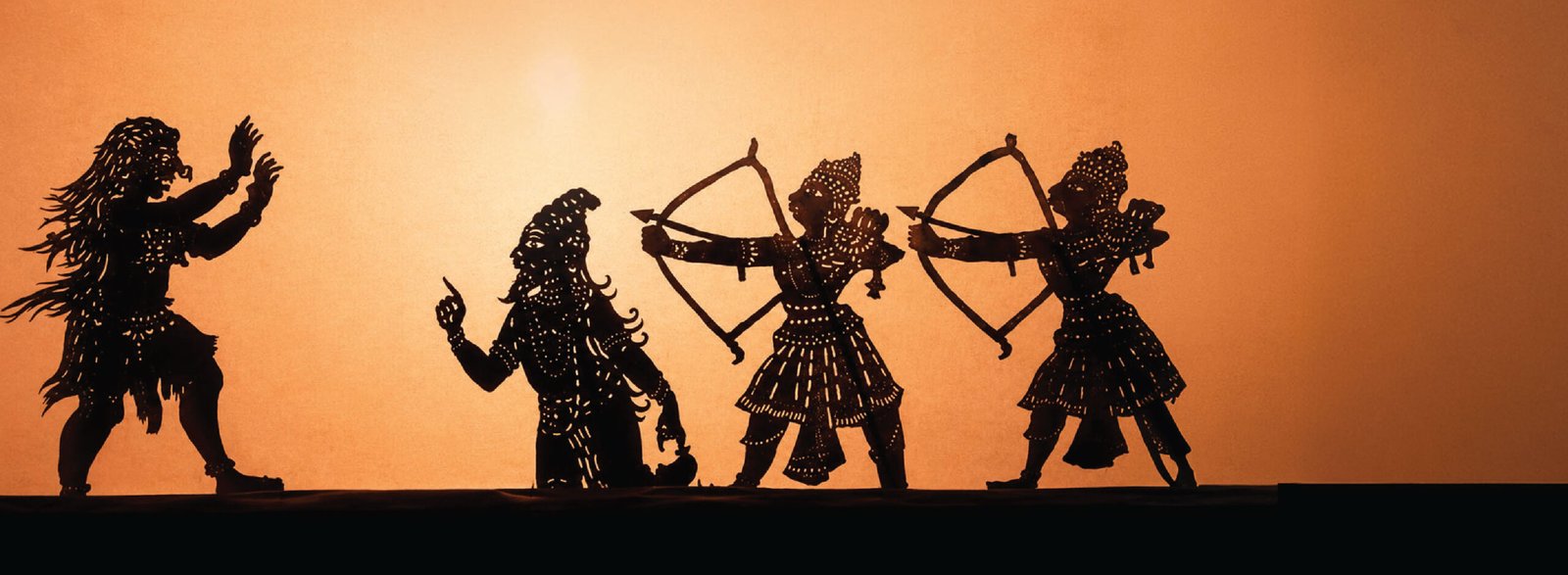
Imagine a village after dark. A white cloth is stretched across a temporary stage. Behind it, lamps are lit. Then, almost out of nowhere, a figure appears — Hanuman flying, Ravana rising, warriors charging into battle.
This is Tholu Bommalata, literally “the dance of leather puppets”, and one of Andhra Pradesh’s oldest surviving performance traditions. Its origins are traced deep into the region’s past, with references linking shadow puppetry to ancient dynastic periods. For generations, travelling puppeteer families carried these stories from settlement to settlement, often forming part of a wider world of itinerant performers and craftspeople who moved wherever an audience could be found.
They performed episodes from the Ramayana, Mahabharata and local legends through the night. Before cinema, television and electricity transformed village entertainment, Tholu Bommalata offered something extraordinary — a moving world of colour, music, dialogue and drama appearing on a simple cloth screen.
The craft behind it is far more sophisticated than the words “shadow puppet” suggest.
The puppets are cut from treated leather, perforated, painted and jointed so that arms and bodies can move independently. Light passing through the translucent leather throws colour and intricate patterns onto the screen, not merely a silhouette.
Major characters could even appear in different sizes, allowing performers to change scale according to the drama of a scene. A towering Hanuman could suddenly dominate the screen; moments later, a smaller figure could return the action to human scale.
In a way, puppeteers were playing with the visual language of close-ups and wide shots centuries before cinema gave those techniques names.
Much of this tradition survives today through artisan families in Nimmalakunta, Andhra Pradesh. Andhra Pradesh leather puppetry received a Geographical Indication tag in 2008, recognising its distinct regional identity.
But recognition has not removed the larger challenge.
A form that once held villages awake through the night now competes with a world carrying unlimited entertainment in every pocket. Many artisans have adapted the same leather-cutting and perforation techniques to lampshades, wall panels and decorative objects simply to keep the craft economically alive.
There is something quietly ironic about that.
Once, Tholu Bommalata was the screen.
Today, it survives by becoming design.
And somewhere in Andhra Pradesh, an artisan is still cutting leather, punching tiny holes into it, adding colour and preparing a character that has already travelled through centuries of storytelling.
All it needs is light.
And Hanuman can fly again.
India’s First In-Train Magazine 001
India’s first in-train magazine offers travelers engaging content like travel tips, destination highlights, and entertainment, making the journey more enjoyable and informative.

Follow Us
Popular Categories