FASHION & STYLE | OFF THE RACK
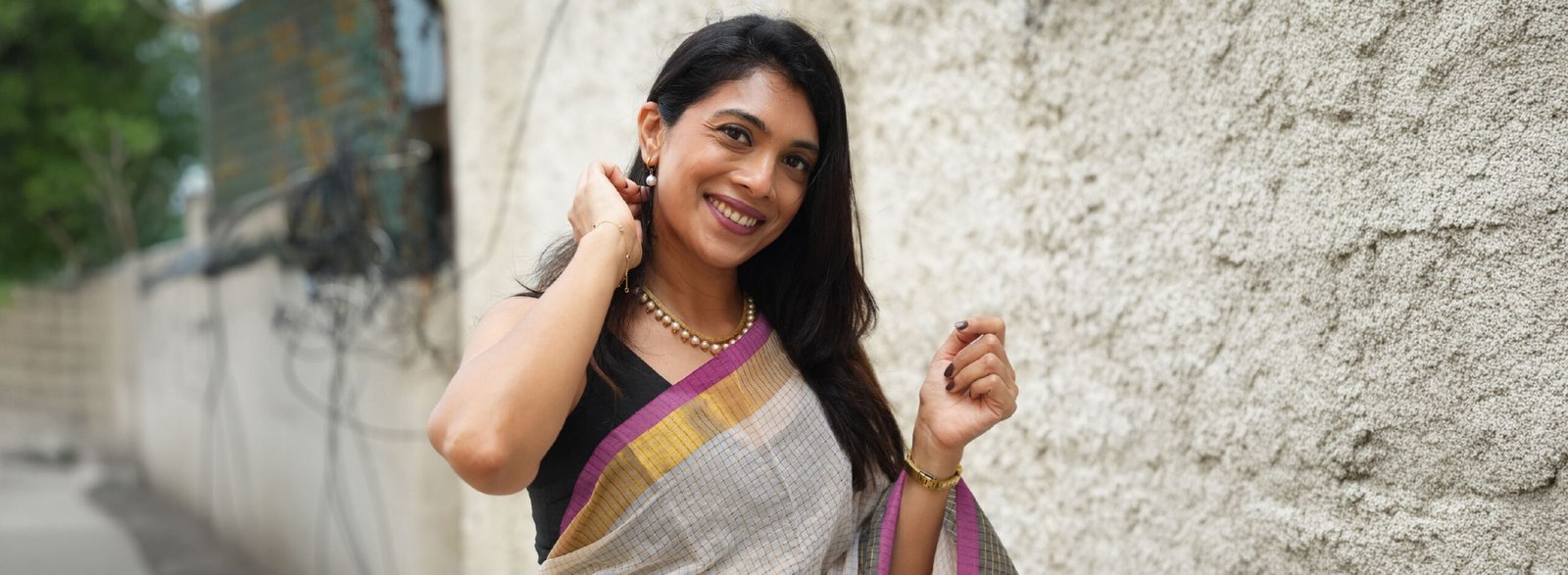
Refresh your festive wardrobe with better styling rather than an entirely new line-up.
Festive dressing has a way of tempting us into thinking every celebration needs something new. But often, the most memorable looks come from pieces already loved, reworked and worn differently.
That is a philosophy Thasneem Masood Rowther knows well. A sustainable fashion designer, impact entrepreneur and advocate for circular fashion, she approaches festive style with an eye for beautiful fabrics, thoughtful craftsmanship and clothes that can return to the wardrobe long after the celebrations end.
Her own festive style is deliberately understated. She gravitates towards handlooms, interesting textures and simple silhouettes rather than clothes that announce themselves too loudly.
“For me, it is about beautiful fabrics and simple silhouettes that let me move and actually be myself,” she says.
A saree, an embroidered dupatta over a solid kurta set, or a familiar jewellery piece styled differently is often enough. There is also an emotional argument for repeating clothes. “I feel that the more you wear clothes, the more they gather memories.”
START WITH YOUR OWN WARDROBE
Before shopping, Thasneem recommends doing something far simpler: open the wardrobe properly.
“Sometimes we tend to forget what we already have,” she says. Pieces that have been sitting untouched for months can often be revived with a different combination rather than replaced.
Start by pulling out older favourites. Then change one element—the blouse, dupatta, footwear or jewellery. With a saree, experimenting with a new blouse or drape can shift the entire mood of the outfit.
Only after that, she says, should you ask whether there is genuinely a gap that needs filling.
It turns festive shopping from an automatic ritual into a more deliberate decision.
LET THE FABRIC DO THE WORK
Jamdani, jacquard, Chikankari and soft silk-cottons are among the fabrics and techniques Thasneem repeatedly gravitates towards.
They offer texture and richness without requiring excessive embellishment.
“At any point, I would go for a Chikankari or a Jamdani,” she says.
The attraction is not only visual. Fabric is one of the first things she notices when considering a garment because its fall, touch and movement determine how wearable it will actually be.
For festive dressing in particular, comfort cannot be separated from elegance. A celebration often means hours of sitting, standing, walking, hosting and moving between activities.
“You need to see how the fabric falls and how it feels against your skin,” she says.
Construction comes next. Even an exceptional textile can lose its impact if the garment is poorly cut or badly finished. Then comes versatility: how many times, and in how many ways, can you realistically imagine wearing it?
INVEST IN A GOOD SAREE
If there is one festive purchase Thasneem considers especially worthwhile, it is a handloom saree.
“For me, it is always a saree,” she says.
A Jamdani or a soft silk-cotton saree with restrained motifs and buttas can remain relevant for years precisely because it does not rely on one passing trend.
The same saree can become something different each time through the blouse, jewellery, footwear and drape.
That adaptability is what makes it an investment rather than merely another festive outfit.
MAKE THE BLOUSE WORK HARDER
The blouse, often treated as the supporting act, can become one of the most useful pieces in a festive wardrobe.
A strong blouse can move between multiple sarees and even work with skirts, palazzo pants or a jacket. Instead of buying it for one specific look, Thasneem suggests thinking of it as a separate that should earn its place across several outfits.
A well-cut kurta set works on the same principle. One solid contemporary set can become a base for different dupattas, jewellery and footwear, shifting from understated to more celebratory without requiring an entirely new ensemble.
GIVE HEIRLOOMS A FRESH SPIN
There is no single correct way to modernise an old saree or heirloom piece because, Thasneem points out, the answer depends first on personal style.
Someone who prefers a traditional aesthetic might retain the familiar blouse and drape and simply change the jewellery.
For someone leaning contemporary, the possibilities widen: a different blouse, an unconventional drape, a jacket, a belt or sharper accessories can alter the silhouette without erasing the identity of the original piece.
The point is not to make every heirloom look “modern”. It is to make it feel like yours.
THE FESTIVE STYLE CAPSULE
Fewer pieces, more combinations and a wardrobe that works beyond one celebration.
- Timeless saree: Silk or silk-cotton
- Statement weave: Jamdani
- Solid kurta set: Preferably in a deeper festive shade
- Standout dupatta: Embroidered or brocade
- Versatile blouses: Two that can move across sarees and separates
- Festive bottom: Brocade or dressy palazzos
- Statement jewellery: One strong piece
- Festive footwear: Comfortable enough to last through the day
CHOOSE ONE HERO ACCESSORY
Thasneem’s approach to jewellery mirrors her approach to clothes: one strong choice is usually enough.
“If you ask me, I usually go for one statement piece, either an earring or a necklace,” she says.
She avoids piling multiple statement elements together. If the earrings are doing the work, they are allowed to stand alone. If it is the necklace, the rest remains restrained.
One accessory, however, almost always stays: her watch.
That same principle makes accessories useful when repeating an outfit. Changing the jewellery, footwear, dupatta or blouse can redirect attention enough that a familiar garment reads differently without pretending it is new.
PLAY WITH COLOUR, NOT JUST TREND
When it comes to long-term versatility, Thasneem returns to colours that can adapt easily.
White and black are among her favourites because both can be restyled repeatedly and can work across different kinds of festive occasions. Red brings an obvious celebratory energy, while yellow is another shade she enjoys.
But longevity depends on more than colour.
“Wardrobe life completely depends on how you handle and take care of the garment,” she says.
A beautifully made saree or kurta set will only remain an investment if it is stored, cleaned and maintained properly. Buying fewer clothes works best when those clothes are treated as pieces intended to stay.
PASS THE COMFORT TEST
Festive fashion comes with an increasingly detailed set of unspoken expectations: what looks appropriate for a puja, what works for a wedding, what photographs well, what is currently fashionable.
Thasneem’s rule is considerably simpler.
“Can I eat, sit, walk, laugh and move around comfortably in this outfit throughout the day?”
It is the question she returns to before deciding whether something actually works.
For her, comfort is not the opposite of style. It is what allows someone to inhabit an outfit naturally enough to feel confident in it.
A garment that looks beautiful while preventing you from participating in the celebration has missed the point.
BUY LESS, BUT BUY BETTER
That principle runs through almost every part of Thasneem’s approach: start with what you own, understand your personal style, pay attention to fabric and construction, and only then decide whether something new deserves space in the wardrobe.
When buying, the useful questions are practical ones. Does the fabric feel good? Does the garment move well? Is the construction strong? Can it be worn more than one way? And, crucially, can you imagine wanting to wear it again after this particular celebration is over?
The result need not be a minimalist festive wardrobe or one stripped of colour and personality. Thasneem’s own capsule still makes room for Jamdani, brocade, silk, statement jewellery and rich festive shades.
The difference is that every piece has a job beyond a single photograph or occasion.
Festive dressing, in that sense, becomes less about constantly finding something new and more about seeing familiar clothes with fresh eyes.
And perhaps that is the most useful remix of all.

India’s First In-Train Magazine 001
India’s first in-train magazine offers travelers engaging content like travel tips, destination highlights, and entertainment, making the journey more enjoyable and informative.

Follow Us
Popular Categories