PHOTOGRAPHY | THROUGH THE LENS
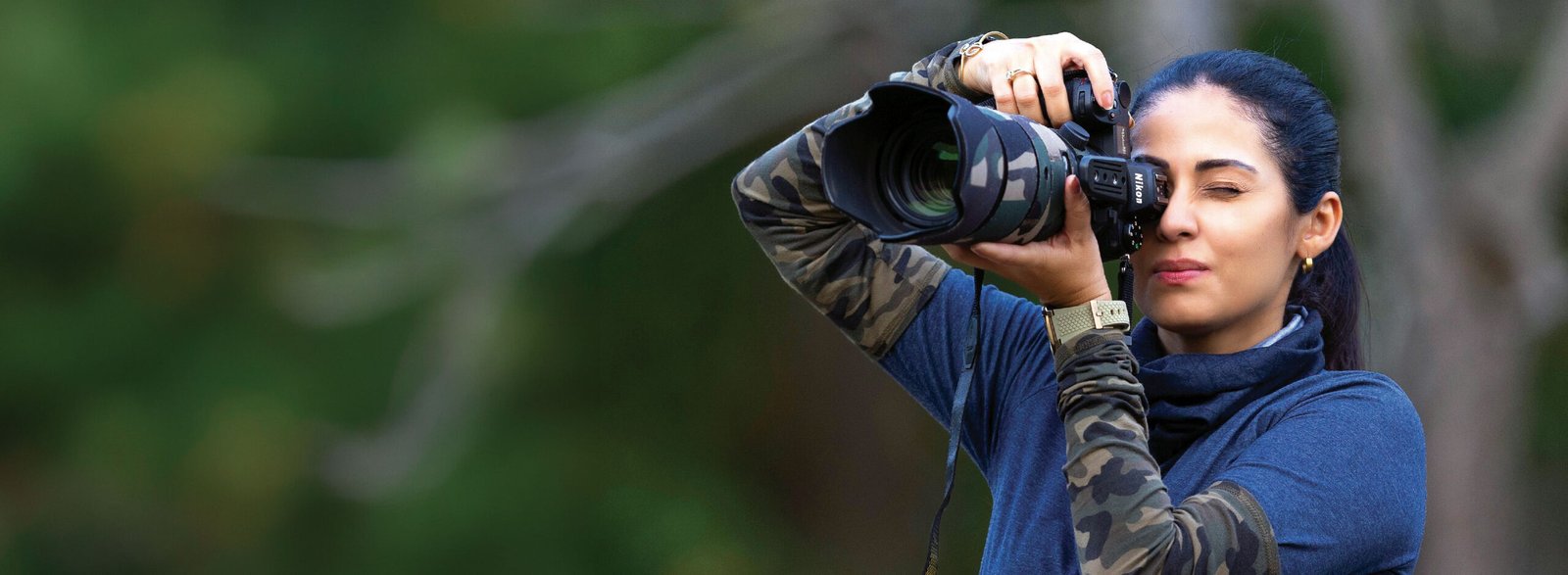
From tiger trails to tiny details, the lens keeps looking closer.
For a generation of moviegoers, Sadaa is still instantly associated with films like Anniyan and Unnale Unnale. Today, however, some of the stories that excite her most unfold far from a film set. She now spends much of her time in forests and reserves, waiting for tigers and tracking smaller species.
Wildlife entered her life almost by accident. While shooting Ahimsa near Panna Tiger Reserve, Sadaa joined a safari simply because she happened to be staying nearby. She had little idea of what to expect. On her very first drive, she saw tigress P151 with two cubs by the Ken River, sitting among the rocks.
It was memorable, but it was a later encounter at Kanha that truly pulled her in.
She had been warned that sightings there could be difficult. Kanha’s dense forest meant tigers were not always easy to spot, and her two-day trip had been planned at the last minute. Then Yuvraj, a well-known tiger in the reserve, emerged unexpectedly and began walking towards their safari vehicle.
“He just kept walking towards our gypsy. We kept moving ahead and he kept trailing us. And that was something that blew my mind,” she recalls.
What stayed with her was not simply the proximity of the animal but its composure. Yuvraj moved through his territory marking it, seemingly unbothered by the people watching him. “He was just walking in his world where we were the guests.”
That encounter changed the rhythm of her life. Occasional safaris became frequent trips across reserves, and a phone camera eventually gave way to proper photography equipment. Initially, the camera was simply a way of recording what she was seeing. There was no plan to become a wildlife photographer or build stories for social media. Like much of her career, she says, it happened gradually and organically.
[INSERT IMAGE 3]
The Story in the Shot
For Sadaa, the photograph itself is only part of what happened.
“In wildlife, you don’t have retakes. You don’t have an opportunity to visualise what can happen the very next moment.”
Unlike a film set, there is no directing the subject, recreating an action or waiting for another take. Her authorship comes later, through editing, music, sequencing and the words she places around an image. She tries to keep what happened in the forest intact while finding a way to communicate the larger story around a single frame.
That is also why she increasingly prefers video. A photograph preserves an instant; video allows her to see what happened before and after it. Yet she has no grand plan to turn that instinct into filmmaking or documentary work just yet.
“I never thought I would go behind the camera from in front of the camera. And I never thought it would be for something as unpredictable a subject as wildlife.”
For now, she is content to see where it leads.
Unpredictability, in fact, has become one of the forest’s biggest lessons.
Sadaa readily admits that patience does not come naturally to her. Early on, waiting for hours in the heat only to discover that a tiger had taken another trail could leave her frustrated. Eventually, the forest began teaching her something different: the sighting was never hers to control.
“It’s entirely the animal’s wish whether or not it wants to show up.”
There are days when hours of waiting result in nothing. Those moments, she says, are humbling. “Being patient and letting go of having control over things is the only way to enjoy the wild.”
The lesson may not always follow her back into everyday life—“I’m a very impatient person, honestly,” she laughs—but once she enters a forest, she knows she has entered a game of patience.
More Than a Photograph
Some encounters have stayed far beyond anything a camera could contain.
Sadaa remembers Maya in Tadoba protecting her tiny cub after a confrontation with a large male tiger. The first indication that something was wrong came through sound: the growling roar of two tigers fighting somewhere inside dense vegetation.
Then the cub emerged.
Moments later, Maya appeared, injured from the confrontation. It was peak summer, and she began walking towards a water body roughly one-and-a-half to two kilometres away. Her exhausted cub struggled to keep pace.
The cub kept calling from behind while Maya barely stopped. She would turn, check whether the male was following and continue moving. Even after reaching the water, Maya first allowed the cub to drink. She herself did not.
“She was so stressed that she wanted to take the cub back to the safe zone.”
For Sadaa, the encounter became less about photographing a tiger and more about watching a mother secure her young.
Another story unfolded around Kolurwali, a tigress in Tadoba searching for her cubs over two days. Two eventually appeared; another was found dead near a lake. For a while, the fourth seemed lost too. Then, the following morning, its calls could be heard from across the water.
Kolurwali swam across to retrieve it, eventually bringing the family back together.
Sadaa made a YouTube vlog about the episode, but even that felt insufficient.
“No matter how much you try, I feel you cannot do justice to what you’ve experienced.”
The photographs and videos preserve fragments. The complete experience, she says, sometimes simply stays with you.
The Little Wild Things
Her lens has since moved beyond tigers.
Over the past couple of years, macro trips have introduced her to an entirely different scale of wilderness—frogs, tiny endemic species and creatures that most travellers might hear without ever stopping to find.
During the monsoon, for instance, the loud call of a frog can come from an animal only a couple of centimetres long. Finding it turns a familiar forest sound into a species, a behaviour and another piece of the ecosystem.
“You come to know that an ecosystem is not just about a couple of larger animals that we see.”
The smaller species have also changed the questions she asks. A healthy population of frogs, for example, can say something about the balance of the ecosystem around them. Certain species exist only at particular elevations or within highly specific habitats.
Instead of simply asking what she can photograph, Sadaa increasingly wants to understand why a species is there at all.
“Now there is more about learning why,” she says.
It has transformed the way she travels through reserves. Tigers may have brought her into the forest, but now her attention moves between the conspicuous and the nearly invisible.
Bringing the Wild Home
That connection with nature follows her home too.
Sadaa rescues and fosters animals, helps find them homes and feeds more than two dozen community cats in her neighbourhood. When she travels, her driver takes over the feeding routine.
Then there are the plants.
An avid plant parent, she has more than 200 plants in her apartment. Gardening began occupying a particularly important place in her life during the pandemic, when she started rescuing plants left outside shuttered shops, taking them home, watering them and bringing them back to health. Some were returned once the businesses reopened; others stayed.
Years later, the ritual became important again after the loss of her father.
She returned to caring for her plants closely, watching plant-care videos and tending to what she affectionately calls her “plant babies.”
“A lot of these things have helped me stay engaged, stay lively, stay happy, stay relaxed.”
Watching something that had been struggling spring back to life under her care brings a particular sense of accomplishment. Gardening, she says, keeps her grounded and closer to nature.
No Fixed Frame
Perhaps it makes sense that a life increasingly defined by observing the unpredictable has left Sadaa uninterested in planning its next chapter too precisely.
She did not plan to move from studying Information Technology to cinema. She did not plan to move from being in front of the camera to standing behind one. And she certainly did not anticipate that wildlife would become such a substantial part of her world.
“The best thing that I feel I can do to my life is not plan it,” she says.
For her, each chapter has worked because she allowed herself to become absorbed in it rather than constantly worrying about what should come next.
For someone long accustomed to being in the frame, perhaps the biggest change has been discovering how much can happen when she steps behind it and simply pays attention.
And if the forests have taught her anything, it may be that the most interesting moment is often the one you could never have planned.
SIDEBAR
HOW TO READ THE JUNGLE
A quick safari cheat sheet through Sadaa’s eyes:
- For a first tiger safari, consider reserves such as Tadoba, Bandhavgarh or Panna, where sightings can be relatively easier.
- Don’t spend the entire drive only scanning the road for a tiger.
- Ask your driver and guide questions. Learn about the birds, animals and sounds around you.
- Listen carefully to alarm calls rather than relying only on what you can see.
- Sambar calls can differ depending on whether they have detected a tiger or a leopard.
- Start associating particular sounds with particular animals.
- If you hear an alarm call, alert your guide. Sometimes following the calls can lead to a sighting.
- Pay attention to the smaller species too; they can tell you as much about a forest as its headline animals.
- Above all, stay curious. The more actively you engage with the forest, the richer the safari becomes.
India’s First In-Train Magazine 001
India’s first in-train magazine offers travelers engaging content like travel tips, destination highlights, and entertainment, making the journey more enjoyable and informative.

Follow Us
Popular Categories