Did One Man Write the Constitution of India?
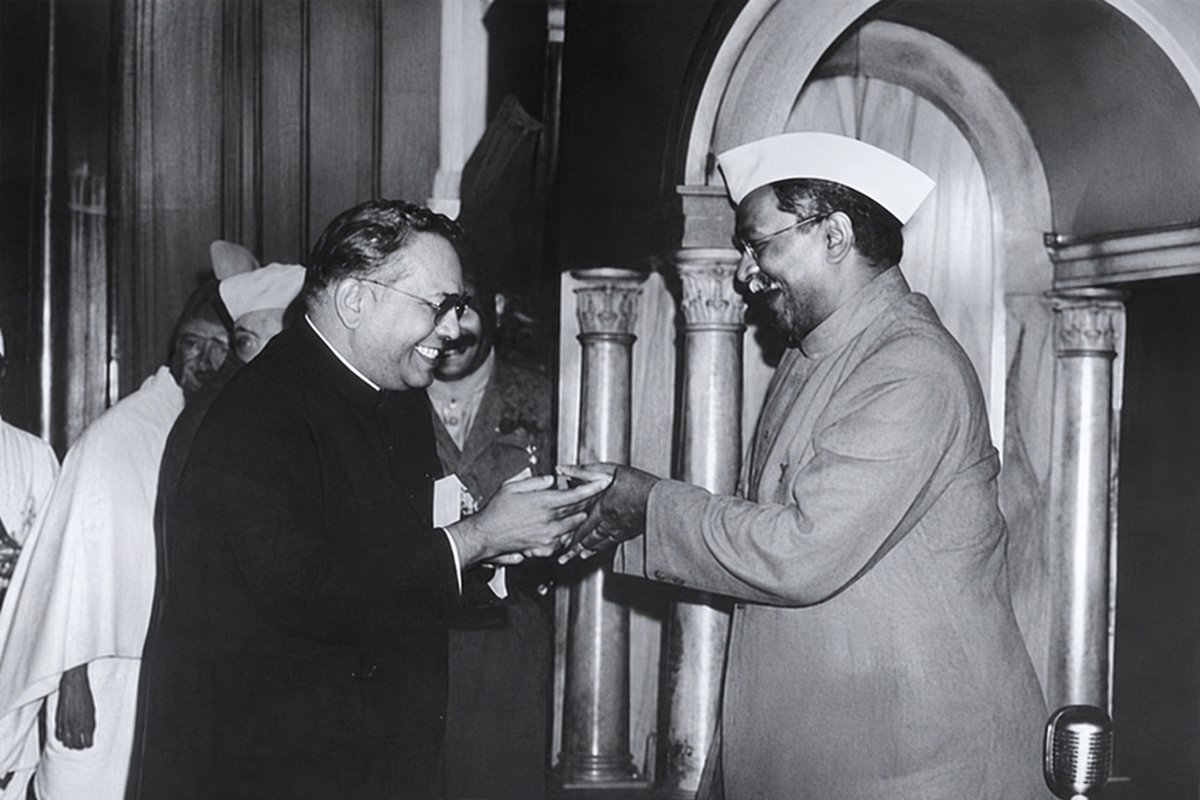
Ask who the architect of the Indian Constitution was, and the answer will almost always be Dr B. R. Ambedkar. As Chairman of the Drafting Committee, Ambedkar gave the Constitution its final shape and steered it through the Constituent Assembly.
But that is not the whole story.
Behind him stood constitutional advisers, legal experts, committee members, artists and a calligrapher whose names rarely appear in textbooks or Independence Day speeches. Yet their work helped lay the foundation of the Indian Republic.
Freedom on August 15, 1947, brought celebration. It also brought difficult questions. Would every Indian have an equal vote? Would women enjoy equal citizenship? Could caste discrimination survive under a free flag? How would minorities be protected? Who would protect citizens from the power of the state?
Independence freed India from colonial rule. The Constitution had to ensure that Indians remained free within their own country. That task took nearly three years and the work of many minds and hands.
Before the Drafting Committee began its work, Constitutional Adviser B. N. Rau studied constitutions from around the world and prepared the first working draft in 1947. Chief Draftsman S. N. Mukherjee translated committee decisions and hundreds of amendments into precise legal language. Ambedkar himself acknowledged the importance of both men.
Within the Drafting Committee, Alladi Krishnaswami Ayyar, K. M. Munshi and N. Gopalaswami Ayyangar contributed to discussions on fundamental rights, federalism, judicial power and Centre–state relations.
Of the Assembly’s original 389 members, only 15 were women.
Dakshayani Velayudhan, its only Dalit woman, argued that political freedom was meaningless without social equality. Hansa Mehta fought for women’s equal citizenship and later helped change the Universal Declaration of Human Rights from “all men” to “all human beings.” Begum Aizaz Rasul, the Assembly’s only Muslim woman, argued that minorities needed equal citizenship, not separate electorates.
Others gave the Constitution its physical form.
At Santiniketan, Nandalal Bose and his students illustrated its pages. Dinanath Bhargava contributed to the rendering of the Lion Capital of Ashoka, which became India’s national emblem. Calligrapher Prem Behari Narain Raizada wrote the original English manuscript by hand.
The Constitution was adopted on November 26, 1949, and came into force on January 26, 1950. Yet its story begins on Independence Day, when freedom created the need for a document that could protect equality and unite a diverse nation.
Ambedkar was recognised, and rightly so. But the Constitution was never the work of one person alone. This Independence Day, let us remember the many architects who shaped the Republic, even if history forgot to place them in the picture.
1. Main opening image
Dr B. R. Ambedkar presenting the final draft of the Constitution to Dr Rajendra Prasad
This is the strongest lead image because it immediately establishes Ambedkar’s central role while allowing the story to reveal the larger team behind him.
The Wikimedia Commons version is marked CC0/Public Domain, which allows reuse, including commercial use.
Suggested caption:
Dr B. R. Ambedkar presents the final draft of the Constitution to Constituent Assembly President Dr Rajendra Prasad in November 1949.
2. Large supporting image
A full meeting of the Constituent Assembly
This visually communicates that the Constitution was a collective national exercise involving hundreds of representatives, not the work of a single person. Wikimedia Commons has a dedicated collection of Constituent Assembly images, but check the licence displayed on each individual file before publication.
Suggested caption:
Members of the Constituent Assembly debate the legal and democratic foundations of independent India.
3. Visual centrepiece
The original handwritten Preamble
This would work beautifully as a half-page image, background texture or highlighted pull-out. The available Wikimedia version identifies the calligraphy and illumination and marks the work as public domain in India.
Suggested caption:
The original Preamble, handwritten by Prem Behari Narain Raizada and illuminated by artists associated with Santiniketan.
4. Portrait strip of the lesser-known architects
Use four or six small archival portraits:
- B. N. Rau
- S. N. Mukherjee
- Alladi Krishnaswami Ayyar
- Dakshayani Velayudhan
- Hansa Mehta
- Begum Aizaz Rasul
Place them under a common heading such as:
The Architects Beyond the Photograph
For each portrait, use only a file clearly marked Public Domain, CC0, CC BY or CC BY-SA. CC BY and CC BY-SA images require attribution; CC0 and public-domain images usually do not, though editorial credit is still good practice.
5. Art and calligraphy panel
Use close-up images of:
- Decorative borders from the original Constitution
- Prem Behari Narain Raizada’s handwriting
- The illustrated Preamble
- The Lion Capital artwork
- Historical illustrations created under Nandalal Bose’s supervision
This section can accompany the paragraph about the artists and calligrapher. The original Constitution is not merely a legal document; it is also a visual work of national history.
India’s First In-Train Magazine 001
India’s first in-train magazine offers travelers engaging content like travel tips, destination highlights, and entertainment, making the journey more enjoyable and informative.

Follow Us
Popular Categories