From Squash Courts to Olympic Pistes
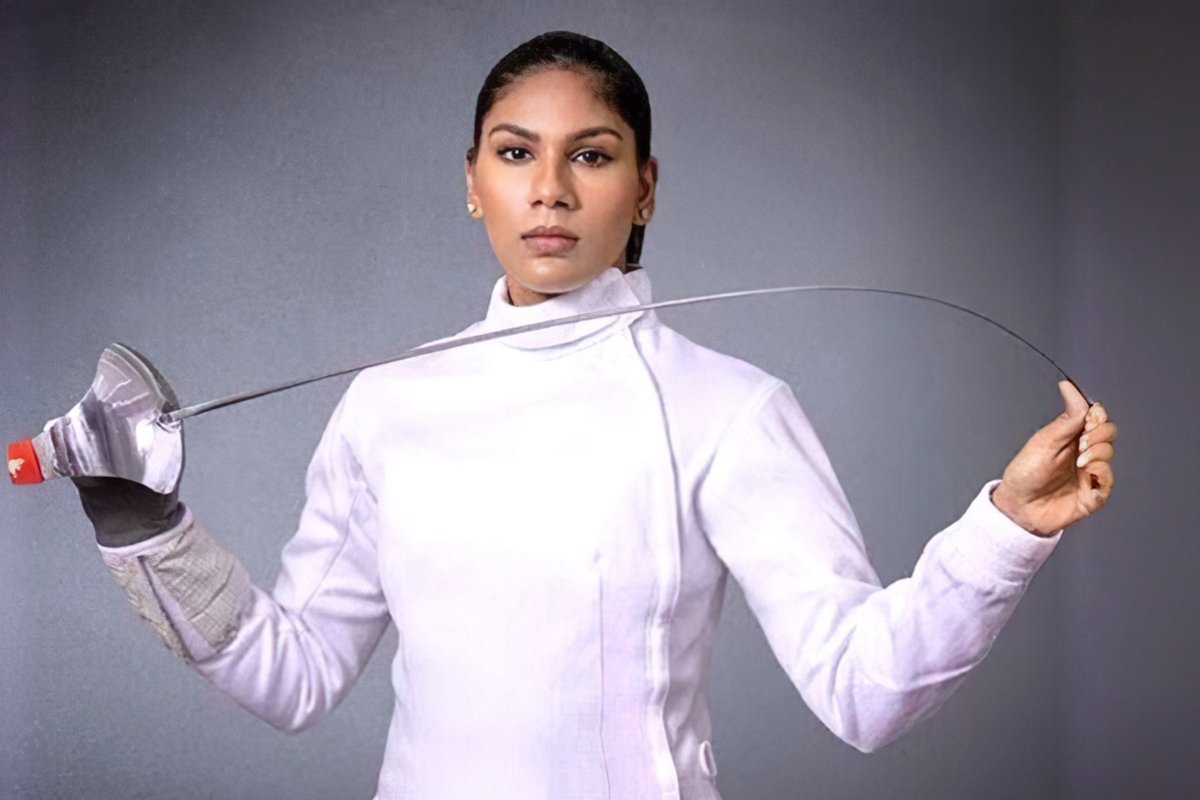
One choice, two sports, and the unlikely path that took a girl from Washermenpet to the Olympic stage.
In 2004, a young Bhavani Devi was training in two sports that had not yet gained popularity in India: fencing and squash. She qualified for the State School Games in both, and by coincidence, the two competitions fell on the same day, at different venues. The choice she made would go on to change the course of her life.
“I see it as a blend of fate and beautiful coincidence,” she says. “I chose fencing because it genuinely excited me. I enjoyed every moment of it, felt a strong sense of belonging, and could see myself growing in the sport.”
Fencing had first entered her life almost by chance, as the only option available to her at school. But that second choice, between fencing and squash, was entirely her own. She was only one or two months into training when she qualified for the State School Games in both sports, and even at that age, she recognised where she felt most at home.
That single choice would eventually make C.A. Bhavani Devi India’s first-ever Olympic fencer. Since then, she has secured India’s first Olympic fencing match victory, won international and Commonwealth gold medals, earned a historic Asian Championships bronze, and received the Arjuna Award in 2021.
None of it came easily. Competitions were expensive, and Bhavani’s mother scraped together the money so her daughter could compete in local and international tournaments across categories.
In the Under-15 category, Bhavani often entered Under-17, Under-20, Senior, and almost every other category available to her. Each entry fee was around ₹200, a significant amount when she was entering several events in the same competition. Yet her mother never stopped her from competing. She encouraged her to enter, to learn, and to keep doing her best.
Her first international competition in Turkey, at the age of fourteen or fifteen, came with a lesson she has never forgotten. She arrived late, changed into her fencing kit in the car, and ran to the piste—only to be told she would not be allowed to compete. She spent most of the day crying outside the fencing hall, still in her fencing costume. It was painful, she recalls, but it taught her the value of time.
POSTCARDS FROM THE PISTE
That decision eventually took Bhavani Devi far beyond Washermenpet, the Chennai neighbourhood where she grew up. From a young age, she was scaling continents, competing across France, Belgium, Turkey, China, the UAE, and the UK, and today she lives in Livorno, a coastal city in Italy. Tokyo remains a favourite among the cities she’s encountered, and Paris is still on her list.
The Dolomites in Italy, however, hold a different place in her imagination. She visited them around two years ago and describes them as the first place she truly fell in love with. “For me, it is the most beautiful place in the world,” she says. “I would love to go there again.”
Livorno, meanwhile, has become her return point between competitions. Its sea is one of the things she treasures most. After days of travelling, airports, and tournament schedules, coming back to the city feels like coming home.
Markets, more than monuments, are where she feels a place come alive. “I enjoy visiting local markets, especially in places like South Korea and Hong Kong. They give you a good feel of the local culture,” she says. A rare free Sunday during a training camp usually means the same thing: wandering somewhere new, in search of a good cup of coffee.
Coffee is often the first thing she looks for in a new city. It has become one of her most dependable travel memories, a small ritual that grounds unfamiliar places. She does not usually stay back after competitions, aware that extending a trip brings extra costs. But training camps sometimes offer a Sunday off, allowing her to step beyond the training centre, explore the city, and take in whatever lies beyond the competition venue.
Food has become another quiet marker of those journeys. Italian food is her favourite, while Korean cuisine has a few dishes she especially enjoys. She is not someone who seeks out every unfamiliar dish, but she is happy to join teammates or coaches when they want to try something local, keeping the nutritional balance of an athlete’s life in mind.
At the end of it all, though, home-cooked Indian food remains her comfort. When she returns to Chennai, she asks her mother for sambhar. Idli, sambhar, and chutney for breakfast, or a simple plate of sambhar rice for lunch or dinner, are enough to make her feel fully home again.
AWAY FROM THE ARENA
Days off are rare, but when they happen, they look refreshingly ordinary: waking up without an alarm, a relaxed brunch, cleaning her home, preparing for the week ahead, replying to emails, and a walk by the beach.
When there is nothing urgent to finish, she goes for coffee, sits near the water, walks, meditates, and allows herself to enjoy the stillness. It is a gentler rhythm than the world of training camps and competitions, but it is no less important to her routine.
The long journeys in between have their own rhythm too, depending on the day: a film, a podcast like Abhinav Bindra’s In the Zone, a philosophy book, or simply sleep.
Bhavani says Bindra’s podcasts are especially valuable because they come from an athlete’s perspective, making the experiences easy to relate to and connect with her own journey. At other times, she turns to music, philosophical reading, or rest—choosing what the moment requires, whether that is staying awake or allowing herself to recover.
The precision, discipline, and efficiency fencing demands have followed her well beyond the piste. “They help me a lot, both in sport and in everyday life,” she says. Friends sometimes tell her she is a little too disciplined and needs to relax more, but after years of elite training, those habits have become part of who she is.
WHAT’S IN MY TRAVEL BAG?
A Small Lord Ganesha Idol
For comfort and a sense of home wherever I go.
Diary
To jot down thoughts, plans, and ideas.
Hair Straightener
A travel essential that always finds its way into my bag.
THE LEGACY OF A FIRST
Years of elite sport have made discipline second nature, but her ambitions now reach beyond her own medals.
The Tokyo Olympics remains deeply personal for reasons beyond the competition itself. Bhavani’s mother was staying outside the Olympic Village, while Bhavani was inside. Each evening, Bhavani would take the battery-operated vehicle from the Village to meet her mother and make sure she was all right.
On the day of her event, Bhavani had arranged a taxi for her mother to reach the venue. The driver never arrived. Unable to reach one another, both were left worried in the hours before the match. Then, as Bhavani walked towards the piste, she saw her mother sitting there.
She still does not know exactly how her mother made it to the venue without knowing the language. But seeing her there brought an immediate sense of relief and pride. Bringing her mother to the Olympics and competing in front of her remains one of Bhavani’s most special memories from Tokyo.
For every young girl who picks up a sabre after her, Bhavani Devi hopes the focus stays exactly where it should: on training and becoming the best athlete she can be. “I hope she does not have to worry about funding, travel, planning, or all the other challenges that many athletes face today,” she says. Those concerns, she believes, should be handled by a strong team of specialists, leaving the athlete free to focus completely on the sport.
Her hope is not simply for more medals or larger stages, but for an ecosystem where talent is allowed to develop without being interrupted by the practical burdens that shaped so much of her own early journey. A young athlete, she believes, should be surrounded by the right specialists and support systems, free to give her full attention to becoming the best version of herself.
One choice, made on an ordinary day in 2004, took a young girl from Washermenpet to Olympic arenas, international podiums, and cities across the world. For Bhavani Devi, the medals matter. But so do the places, the people, and the experiences the sport has introduced her to along the way.

India’s First In-Train Magazine 001
India’s first in-train magazine offers travelers engaging content like travel tips, destination highlights, and entertainment, making the journey more enjoyable and informative.

Follow Us
Popular Categories