When Words Take The Stage
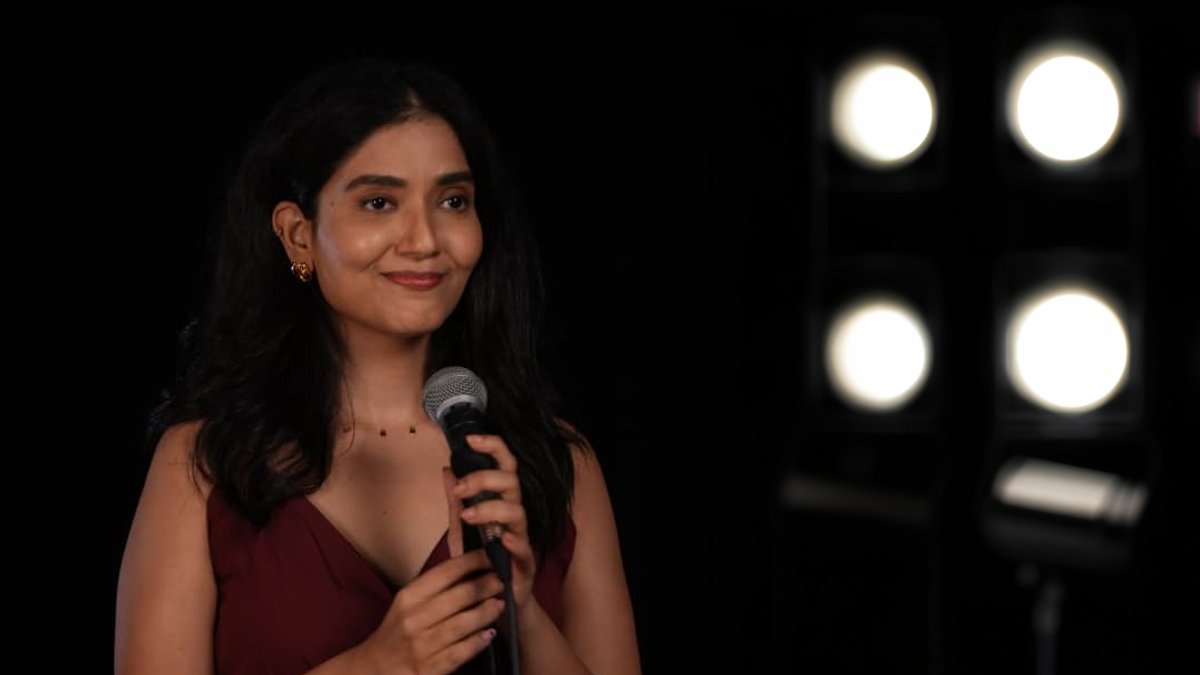
Performer and writer Sainee Raj on spoken word, storytelling, and the evolving poetry scene in India
Sainee Raj has always existed somewhere between storytelling and performance. Long before spoken word poetry entered her life, she was already familiar with film sets, cameras, scripts, and the rhythms of performance itself. As a child artiste, Raj grew up surrounded by cinema, an experience that quietly shaped the creative direction she would eventually move towards years later.
“I was a child artiste, and that plays a huge role in me wanting to choose the performance life,” she says. “I loved being on set, but I was always curious about what happened behind the camera.”
That curiosity slowly evolved into a serious interest in writing. While studying mass media in college, Raj realised she wanted to tell stories for the screen. She later trained in screenwriting under acclaimed writer Anjum Rajabali at Whistling Woods International and began writing professionally for companies including AIB and Disney.
Poetry, however, arrived unexpectedly.
In 2019, Raj attended a poetry open mic and decided to perform a few poems she had written casually for herself. That evening would eventually alter the course of her creative journey. One of her performances, Sahi Aur Galat, later went viral online, introducing her to a much wider audience and giving her the confidence to continue performing spoken word poetry more seriously.
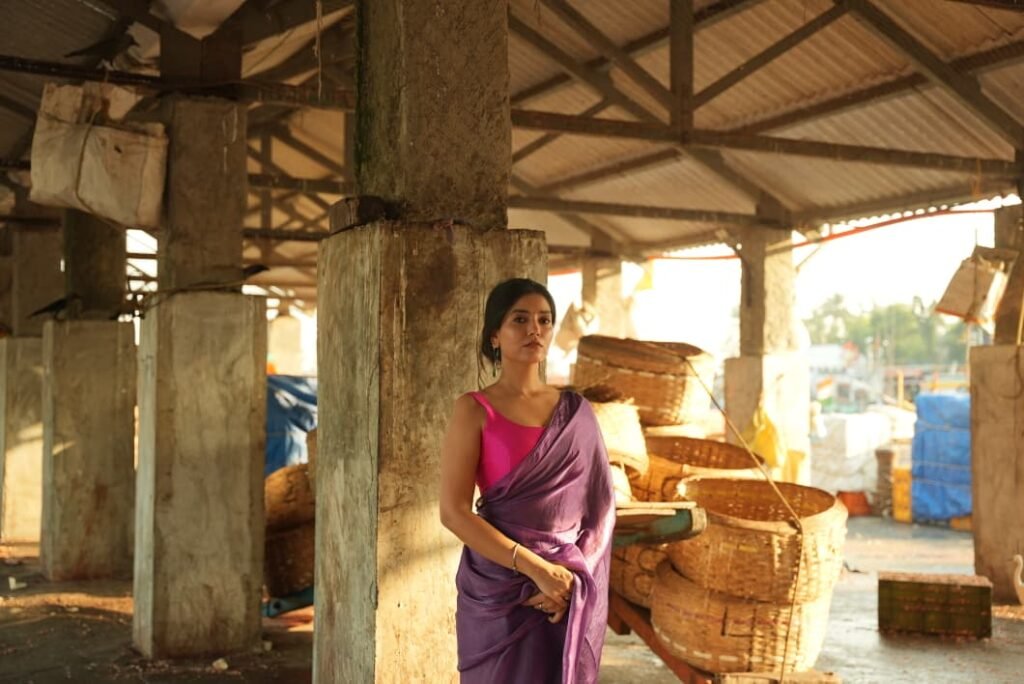
When Performance Found Poetry
Even today, Raj speaks about poetry with a certain hesitation and humility. “I’m still a very shy poet and refrain from being called one,” she says with a laugh. “But I do wholeheartedly enjoy being on stage and want to explore it more and more.”
That relationship between stage and poetry perhaps explains why her performances feel less like recitations and more like carefully shaped storytelling experiences. Her work often moves fluidly between theatre, poetry, humour, reflection, and performance, carrying traces of her background as both an actor and a screenwriter.
For Raj, spoken word resonates deeply today because younger audiences are increasingly searching for emotional honesty in a world built around speed and instant gratification.
“I think in this day and age, when everything is fast-serving and gratification is fleeting, the need of the hour is patience, warmth, relatability and knowing that you’re not alone in feeling what you feel,” she explains. “Poetry reassures younger people that it’s okay to ponder, wonder and make blunders.”
That emotional relatability perhaps explains why performances like The Universe is Listening continue finding audiences years after they were first released. Raj herself believes poems create entirely different experiences depending on how they are consumed. A poem read quietly on paper can evoke something deeply personal, while a live performance depends heavily on voice, pauses, rhythm, and theatricality to hold attention.
“The poems I write for stage end up being more performance-oriented because it’s important for me to grip the audience into listening to what I’m saying,” she says. “It’s a test of their attention span, so there’s a tad bit of theatrics.”
This theatrical quality is not accidental. Raj openly acknowledges that her performances are shaped equally by poetry, acting, and storytelling rather than by poetry alone.
“I’m an actor and a writer who stumbled upon poetry,” she says. “I can only strive to leave a mark if I create an amalgamation of all three. Do I always succeed? No. But I’ll never stop trying.”
On stage, she treats performance tools almost like invisible instruments. Pauses, rhythm, body language, eye contact, voice modulation, and timing all become part of the storytelling process. For Raj, performing live is not simply about self-expression but also about respecting the attention audiences choose to give an artist.
“When you’re on stage, you’re invincible,” she says. “You have a microphone in your hand and so many audience members have trusted you with entertaining them. Sometimes they’ve even paid their hard-earned money. I never take that for granted.”
The Evolution of Spoken Word in India
Since Raj first began performing in 2019, India’s spoken word ecosystem has expanded rapidly. Open mic venues have multiplied across cities, poetry festivals attract larger crowds, and spoken word creators now build substantial audiences online. Colleges increasingly include poetry competitions as part of cultural festivals, something Raj finds especially encouraging.
“Brands seem way more interested, venues have expanded, and poets have massive social media followings,” she says. “But more than that, education is encouraging spoken word poetry now. Every college festival has a poetry competition, and that really warms my heart.”
At the same time, she believes the scene is still evolving and far from complete. Raj compares poetry’s current moment to where stand-up comedy stood nearly a decade ago — full of promise, visibility, and experimentation, but still growing into itself.
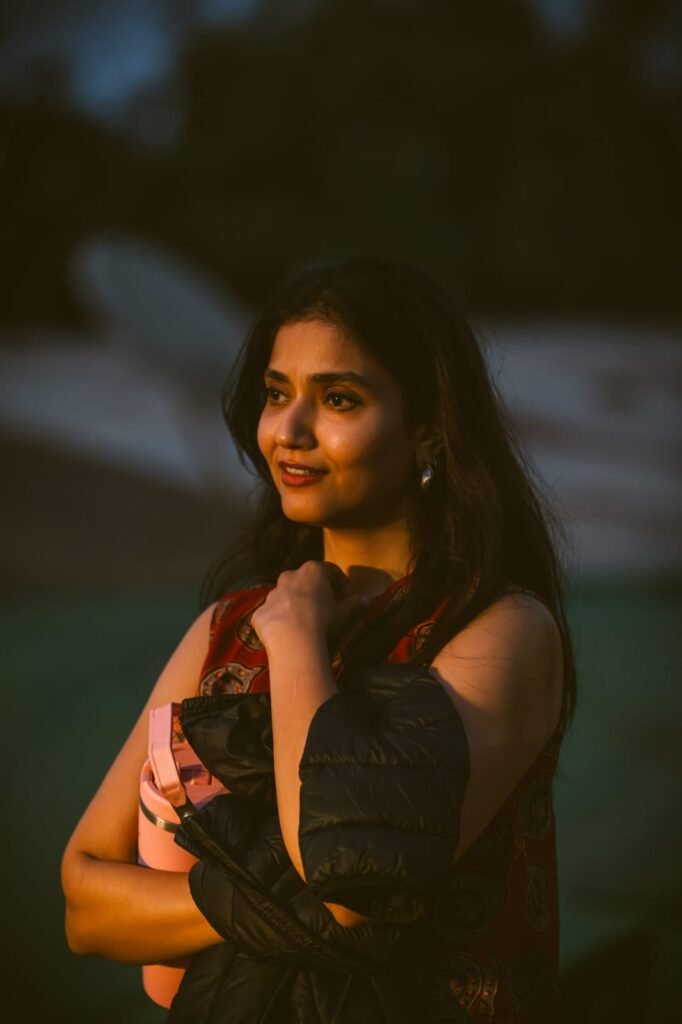
“We have a lot of talent that’s still not been discovered,” she says. “There are more ways to tell stories, more languages to learn, more glass ceilings to break.”
Digital platforms, according to Raj, have undeniably helped poetry reach audiences that traditional literary spaces rarely could. Spoken word is no longer viewed as inaccessible or niche in the way it once was. Audiences now discover poems through performances, short videos, festivals, and live events rather than solely through books or print publications.
At the same time, she acknowledges that visibility comes with its own risks. Social media’s speed often rewards instant virality over depth or sincerity. “We’re very quick to publish mediocrity for views,” she admits honestly. “Maybe a little more hard work could help find the balance between popularity and sincerity.”
Beyond spoken word, Raj has also worked extensively in screenwriting, including co-writing the award-winning short film Interior Cafe Night. Yet interestingly, she sees very little difference between writing for film and writing poetry. For her, storytelling always begins with understanding what the story is trying to say and where it eventually needs to arrive emotionally.
“Every story has a beginning, middle and end,” she says. “Whether it’s a poem, a screenplay, or a performance, I need to know what I’m saying and where it’s going before I begin.”
As Long As Life Exists
As conversations around poetry continue evolving in contemporary culture, Raj remains optimistic about its future. For her, poetry is not confined to literature alone but exists quietly within everyday life itself, inside memories, cities, relationships, humour, longing, heartbreak, and ordinary moments people often overlook.
“There’s poetry in everything,” she says. “You can write about a puddle, and you can write about a lover. There’s no end to summarising life, so there’s no end to poetry.”
And perhaps that belief explains why spoken word continues resonating so strongly today. In a culture increasingly built around speed, performance, and constant distraction, poetry still asks people to pause, listen carefully, and feel something honestly for a few moments, something Raj herself continues striving to create every time she steps onto a stage.

India’s First In-Train Magazine 001
India’s first in-train magazine offers travelers engaging content like travel tips, destination highlights, and entertainment, making the journey more enjoyable and informative.

Follow Us
Popular Categories